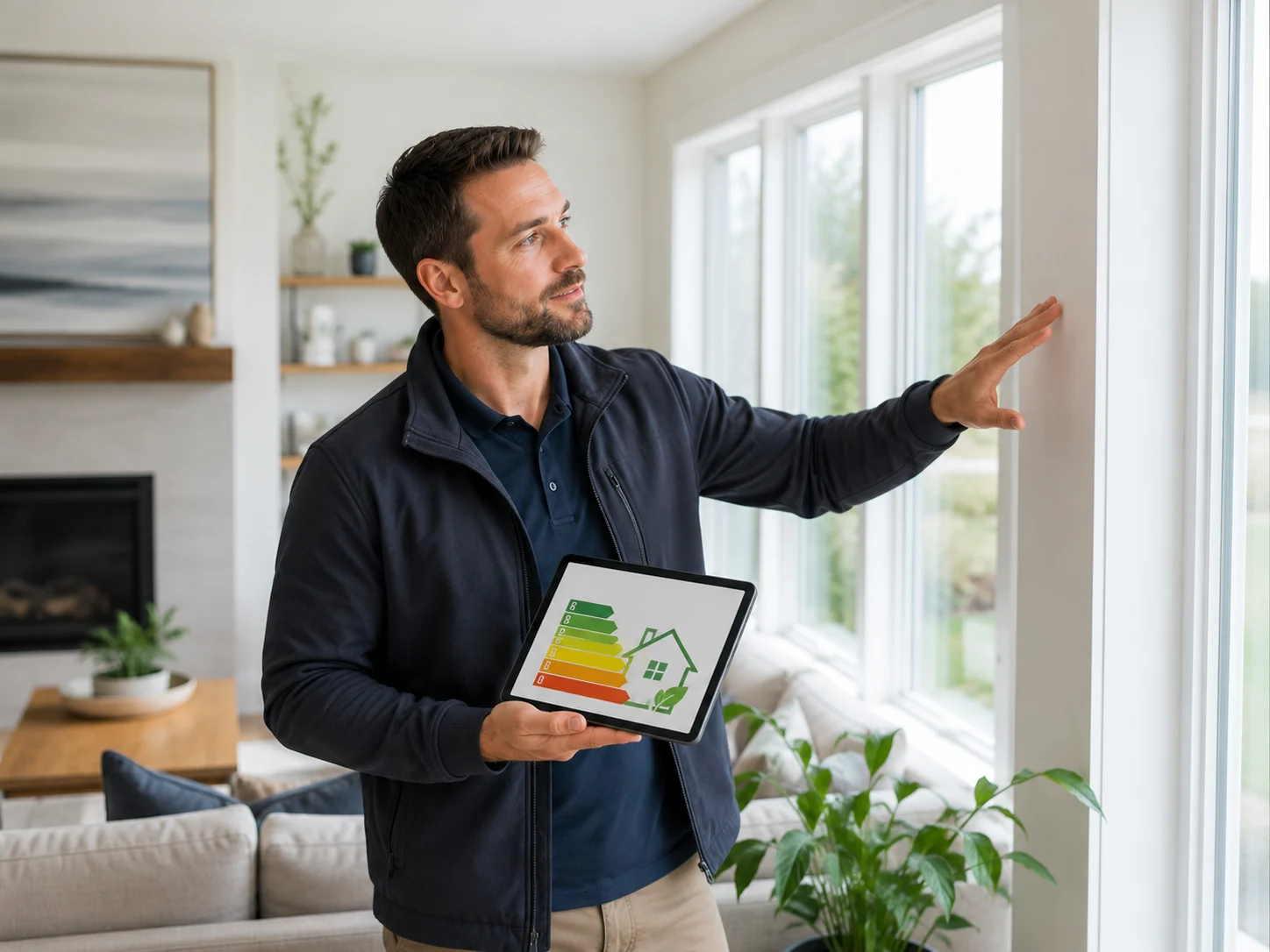
An EnerGuide home energy evaluation is a standardized, NRCan-based assessment that measures how much energy your home uses and shows exactly where it can be improved. A trained energy advisor inspects the whole house, runs a blower door test to measure air leakage, and gives you an official EnerGuide rating plus a personalized upgrade plan ranked by cost and payback.
It is the starting point for almost everything else — qualifying for rebates, meeting a permit requirement, buying or selling with confidence, or simply making a home warmer and cheaper to run. This guide walks through what the evaluation measures, what happens on the day, and what you receive at the end.
What an EnerGuide evaluation actually measures
EnerGuide is Canada’s official rating system for home energy performance, administered by Natural Resources Canada (NRCan). An evaluation looks at the whole house as a system rather than one component in isolation.
A registered energy advisor assesses the parts of your home that drive energy use, then models your home’s performance to produce a single, comparable rating.
- Insulation levels in the attic, walls and foundation
- Windows, doors and how well the building envelope is sealed
- Heating, cooling and hot water systems
- Air leakage, measured with a calibrated blower door test
- Overall energy use, expressed as an EnerGuide rating
What happens during the visit
A typical evaluation takes a few hours and is non-invasive. Your energy advisor walks through the home, records the details above, and sets up the diagnostic equipment that makes the assessment accurate rather than a guess.
The blower door test is the centrepiece: a calibrated fan is fitted to an exterior door and gently depressurizes the house, drawing outside air in through every gap. This reveals your air changes per hour (ACH) and pinpoints exactly where drafts and heat loss occur. Where useful, a thermal imaging (infrared) scan is used to see missing insulation and hidden air leaks behind finished walls.
The report and rating you receive
After the visit you receive a clear, personalized report. It includes your official EnerGuide rating and label, a full list of where energy is being wasted, and a prioritized set of upgrades ranked by cost and expected payback — so you know what to fix first, not just what is wrong.
The report is written to be acted on. It is honest guidance in your interest, never a sales pitch for products.
Why Canadian homeowners get an evaluation
Most people book an evaluation for one of a few clear reasons, and the report supports all of them:
- To qualify for rebate programs such as Canada Greener Homes, which require a pre- and post-upgrade evaluation
- To meet a permit or energy-code requirement for a renovation or new build
- To verify performance when buying or selling a home
- To lower energy bills and make the home more comfortable year-round
How to prepare for your evaluation
Preparation is simple. Clear access to the attic hatch, furnace and hot water tank, and make sure the advisor can reach windows and exterior doors. Keep fireplaces and wood stoves unlit on the day, and have a rough idea of the home’s age and any past upgrades — it helps the advisor model your home accurately.
Frequently asked questions
How long does an EnerGuide home energy evaluation take?
Most evaluations take about two to three hours, depending on the size and complexity of the home. The blower door test and a full walk-through of the insulation, windows, and heating systems are all completed in a single visit.
Do I need an EnerGuide evaluation to get a rebate?
Yes — national programs such as Canada Greener Homes require an EnerGuide evaluation before you start upgrades and a second evaluation afterward to confirm the improvements. The evaluations are completed by a registered energy advisor.
What is a blower door test and is it safe?
A blower door test uses a calibrated fan fitted to an exterior door to gently lower the air pressure inside the home, drawing outside air in through every leak. It is completely safe, non-destructive, and is the most reliable way to measure a home’s airtightness (air changes per hour).
Will the evaluation tell me exactly what to fix?
Yes. Your report ranks recommended upgrades by cost and payback, so you can see which improvements deliver the biggest savings first. It is guidance in your interest — we do not sell products or upgrades.
Related services
Ready to move from reading to results?